

Cotton, Poly, Triblend… What Does It All Mean?

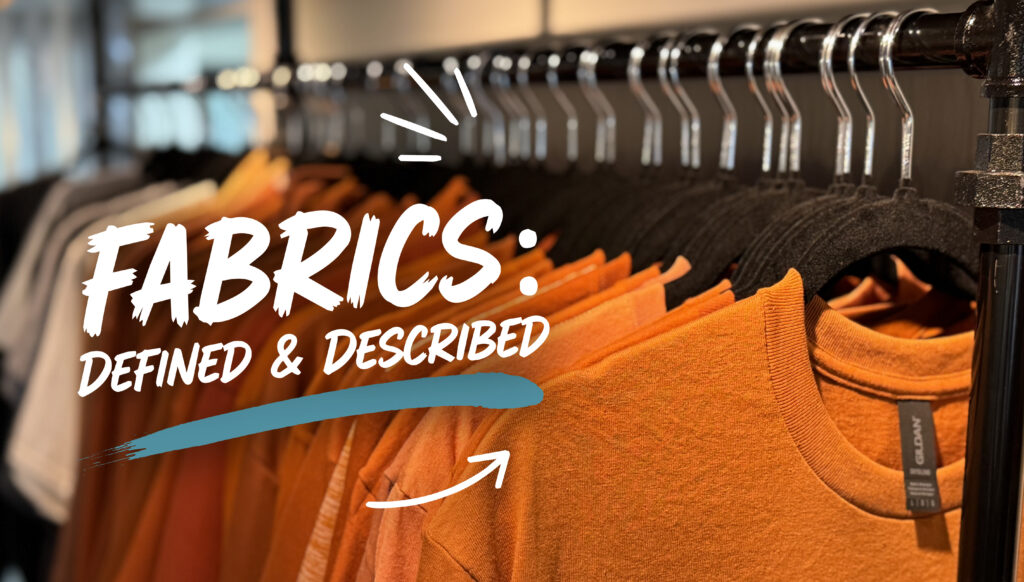
Cotton. Triblend. Ring-spun. Pique.
You’ve probably heard the terms…
But what do they actually mean — and why do they matter when choosing apparel?
This week we’re breaking down common fabric types and apparel terms in plain English to help you better understand what goes into the perfect shirt.
Choosing apparel can feel overwhelming.
There are endless fabric blends, marketing terms, and product descriptions — and most people just want to know one thing:
“What’s actually going to work best for my project?”
That’s where experience matters.
At Austin Screen Printing, helping customers choose the right garment is just as important as the printing itself.
Because the right fabric affects:
- Comfort
- Durability
- Print quality
- Fit
- Performance
- And ultimately… whether people actually wear it.
Natural Fabrics
Cotton
Cotton is a natural fiber grown from the cotton plant and is the fabric most people are familiar with in everyday t-shirts.
It feels:
- Soft
- Breathable
- Comfortable against the skin
Depending on how it’s processed, cotton can feel anything from rugged and heavyweight to smooth and premium.
It tends to have a more natural, slightly matte appearance compared to synthetic fabrics.
Linen
Linen is made from flax fibers and has a light, airy feel with visible texture.
It feels:
- Cool and breathable
- Crisp but relaxed
- Slightly textured and lightweight
Linen naturally wrinkles more than cotton, which is actually part of its casual, lived-in look.
Silk
Silk is a natural fiber known for its smooth surface and luxury feel.
It feels:
- Extremely soft
- Lightweight
- Smooth and almost slippery
Silk has a natural sheen and drapes very fluidly compared to stiffer fabrics.
Wool
Wool comes from animal fibers and is naturally insulating.
It feels:
- Warm
- Soft or textured depending on the type
- Slightly fuzzy or lofty
Modern wool garments are often much softer than traditional heavy wool people may remember.
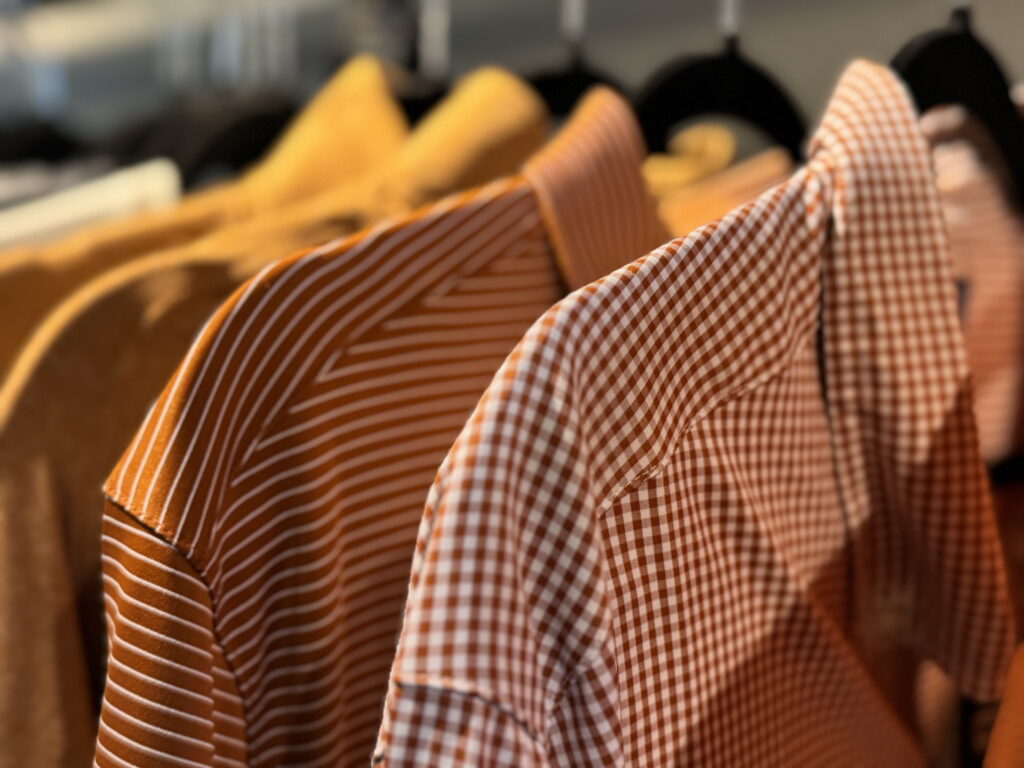
Synthetic & Blended Fabrics
Polyester / Poly
Polyester is a synthetic man-made fiber engineered for durability and performance.
It feels:
- Smooth
- Lightweight
- Slightly slick compared to cotton
Polyester usually holds color extremely well and resists shrinking and wrinkling. Performance shirts often have a cool, athletic feel because of the polyester content.
50/50 Blend
A 50/50 blend combines cotton and polyester together.
The goal is to combine:
- The softness of cotton
- The durability of polyester
It usually feels softer and more broken-in than pure polyester while staying lighter and more stable than 100% cotton.
CVC (Chief Value Cotton)
CVC is a fabric blend that is typically made with:
- A higher percentage of cotton
- A smaller percentage of polyester
Common blends are:
- 60/40 cotton/poly
- 52/48 cotton/poly
The goal of CVC fabric is to keep the soft, natural feel of cotton while adding some of the durability and stability of polyester.
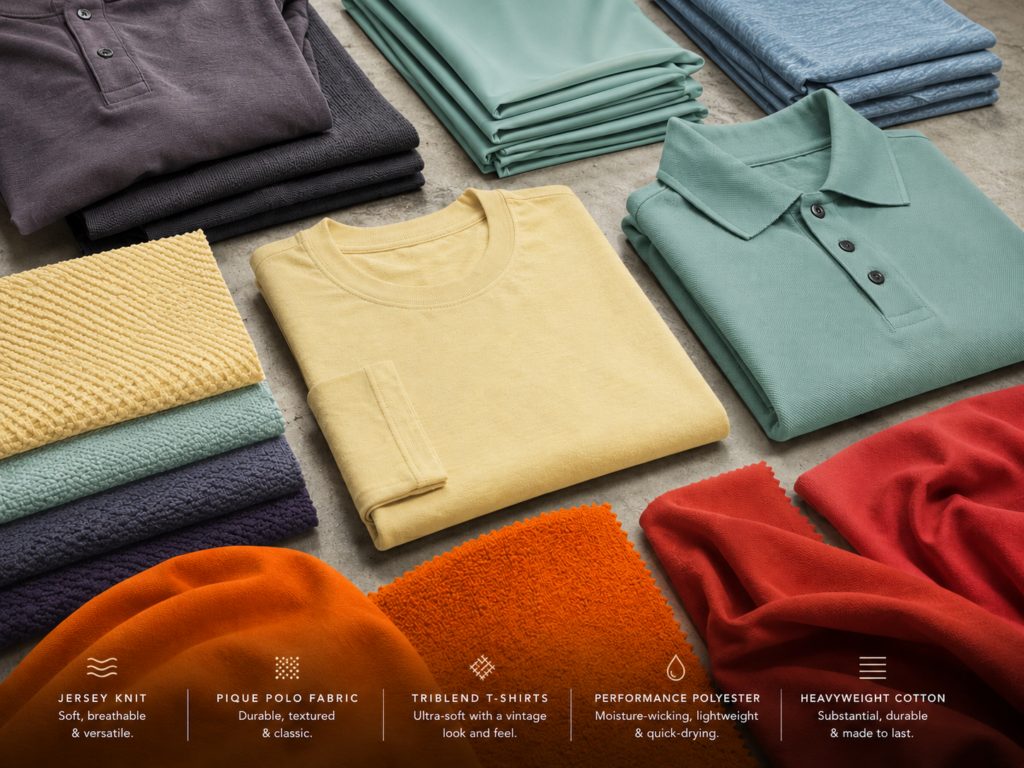
Triblend
Triblends typically combine:
- Cotton
- Polyester
- Rayon
These fabrics are known for an ultra-soft, almost vintage retail feel.
They tend to feel:
- Very lightweight
- Broken-in
- Smooth and drapey
This is the fabric people often describe as “super soft.”
Rayon / Viscose
Rayon is a semi-synthetic fiber made from processed plant material.
It feels:
- Extremely soft
- Silky
- Fluid and lightweight
Rayon adds softness and drape to blended fabrics, which is why it’s commonly used in triblends.
Spandex / Lycra
Spandex is a stretch fiber added in small amounts to give garments flexibility.
It feels:
- Stretchy
- Flexible
- Form-fitting
Usually blended with other materials rather than used alone.
Nylon
Nylon is a durable synthetic fiber with a smoother and slightly shinier appearance than polyester.
It feels:
- Slick
- Lightweight
- Durable
Often associated with outerwear, athletic gear, and bags.
Recycled Polyester
Recycled poly is polyester made from reclaimed materials like recycled plastic bottles.
It generally feels very similar to standard polyester:
- Smooth
- Lightweight
- Performance-oriented
The difference is more about sourcing and sustainability than feel.
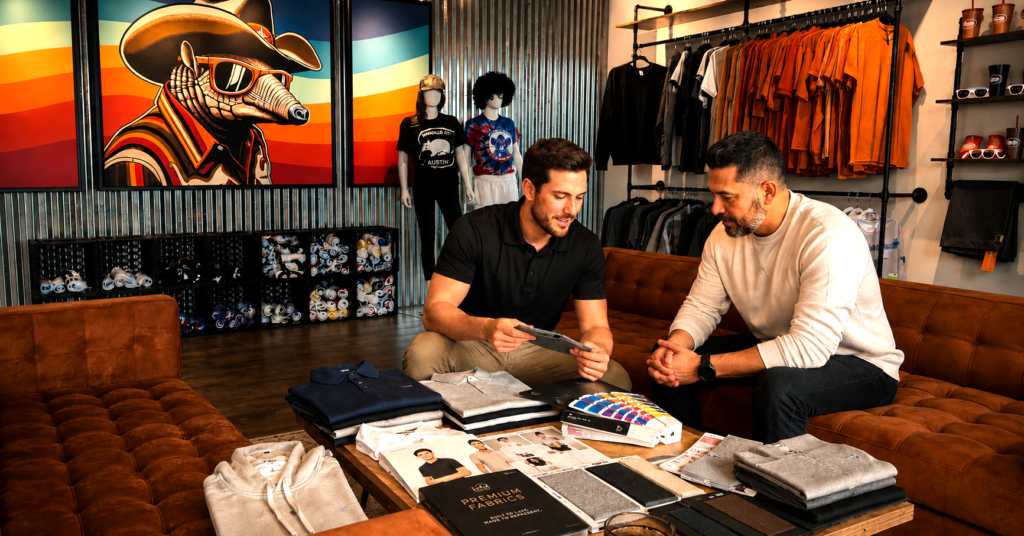
Fabric Construction & Knit Types
Jersey Knit
The classic t-shirt fabric construction.
It feels:
- Soft
- Flexible
- Comfortable with natural stretch
Most casual tees are jersey knit.
Rib Knit
A fabric with raised vertical texture lines.
It feels:
- Stretchier
- Thicker
- More fitted
Often used around collars, cuffs, and fitted garments.
Interlock
A tighter, denser knit construction.
It feels:
- Smoother
- Heavier
- More premium and structured
Usually softer and more polished than standard jersey.
Pique
A textured knit fabric commonly found in polos.
It feels:
- Slightly textured
- Structured
- Breathable
The tiny raised texture gives polos their classic look.
Oxford
A woven fabric with visible texture often used in button-down shirts.
It feels:
- Crisp
- Structured
- Slightly heavier than standard dress fabrics
Jacquard
Fabric woven with patterns or texture directly into the material.
It feels:
- Detailed
- Elevated
- Textured and premium
Often used in upscale polos and fashion apparel.
Fabric Quality Terms
Ring-Spun Cotton
Cotton made using finer, smoother yarns.
It feels:
- Softer
- Cleaner
- More premium than standard cotton
Combed Cotton
Cotton that has been refined to remove short fibers and impurities.
It feels:
- Extra smooth
- Softer
- More consistent
Apparel Terms Explained
Hand
“Hand” simply means how the fabric feels when touched.
A shirt can have:
- A soft hand
- A dry hand
- A textured hand
It’s basically the tactile personality of the fabric.
Drape
Drape describes how fabric hangs on the body.
Some fabrics:
- Flow and move softly
- Others feel more stiff and structured
GSM
GSM stands for “grams per square meter” and refers to fabric weight.
Lower GSM:
- Lighter
- Airier
Higher GSM:
- Heavier
- Thicker
- More structured
Side Seam
A shirt sewn together with side panels instead of a tubular body.
Usually gives:
- Better shape
- More modern fit
- Cleaner structure
Neck Tape
Fabric reinforcement sewn inside the collar seam.
Adds:
- Comfort
- Durability
- A cleaner premium feel
Moisture Wicking
Fabric engineered to pull sweat away from the skin.
Usually feels:
- Cooler
- Smoother
- More athletic
Snag Resistant
Fabric designed to resist pulls and pilling.
Typically has:
- A tighter
- More durable surface texture
UPF Rated
Fabric engineered to help block UV rays from the sun.
Usually associated with:
- Lightweight outdoor performance fabrics
Stain Resistant
Fabric treated to help liquids and dirt release more easily.
Often feels:
- Slightly smoother or more performance-oriented
Why This Matters
The garment is the foundation of the final product.
A great design printed on the wrong shirt can completely change the experience.
That’s why we spend so much time helping customers choose:
- The right fabric
- The right fit
- The right weight
- The right print method
Because great merch starts long before production.
Need Help Finding the Perfect Garment?
That’s what we do every day.
If you’ve got an upcoming project, let’s talk through the options and find the right fit for your brand.
- Fill out this form to start a conversation
- Call us to walk through the options 512-454-6249
- Stop by the shop in person 8613 Cross Park Dr. Austin, TX 78754
Austin Screen Printing & Austin Embroidery
Proudly serving Austin since 1975
Thoughtful apparel. Built for real life.